Launching a Turo Clone With React Native: The Realistic Playbook
Thinking about launching a peer to peer car sharing app like Turo? Here is what it actually takes to build one with React Native, what it costs, and when a ready made clone makes more sense.
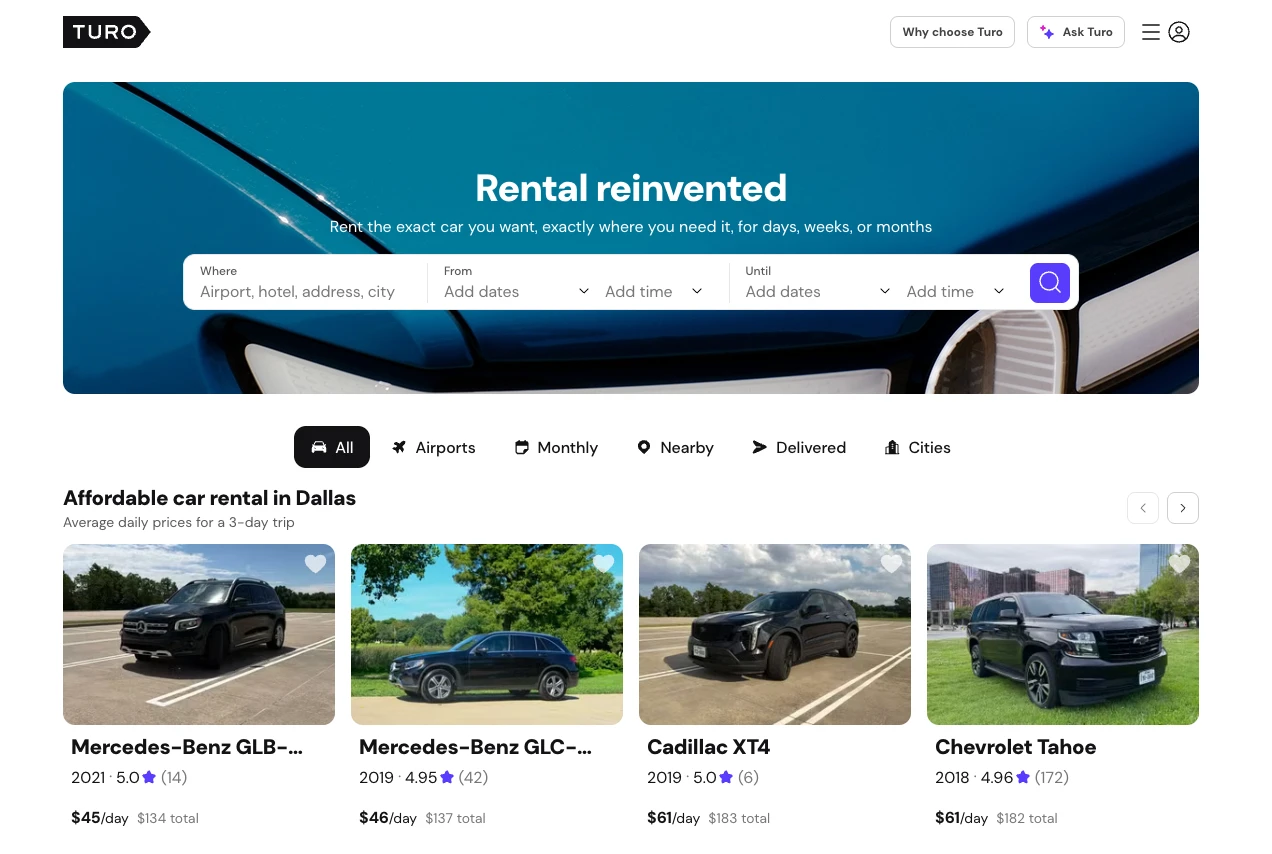
Turo turned “rent your neighbor’s car” into a multi billion dollar business, and every few weeks someone emails us asking the same thing: can I build something like that for my city or my niche? Short answer: yes, and React Native is honestly one of the smartest ways to do it. Longer answer: the app is the easy half. The marketplace is the hard half.
In this guide we’ll walk through what a Turo style app actually consists of, how to build it with React Native, what it costs, and the shortcut route if you don’t want to spend six months in Xcode and Android Studio.

What a Turo Clone Actually Is
A Turo clone is a peer to peer car rental marketplace. Owners list their cars with photos, pricing and availability. Renters search, book and pay. The platform sits in the middle, takes a commission, and handles the messy parts: identity checks, deposits, disputes and reviews.
That means you’re really building three products at once:
- The renter side: search with map and filters, car detail pages, booking calendar, payments, trip management.
- The host side: listing wizard, calendar and pricing controls, earnings dashboard, payout setup.
- The admin panel: user verification, listing moderation, commission settings, refunds and analytics.
Underestimating the second and third parts is the classic first timer mistake. The renter app is maybe 40 percent of the work.
Why React Native Is a Good Fit
You need to be on iPhone and Android from day one, because hosts and renters won’t all be on the same platform. Building two native apps doubles your cost and your bug surface. React Native gives you one codebase, near native performance, and a massive ecosystem of packages for exactly the things a car sharing app needs: maps, chat, payments and push notifications.
We’ve compared the options in detail in our native vs cross platform guide and our roundup of cross platform frameworks, but for a marketplace MVP the decision usually comes down to React Native or Flutter. If your team knows JavaScript, React Native wins by default.
The Core Tech Stack
| Layer | Typical choice | Why |
|---|---|---|
| Mobile app | React Native (Expo) | One codebase for iOS and Android, fast iteration, OTA updates |
| Backend | Node.js or Laravel + PostgreSQL | Bookings are relational data; you want transactions and constraints |
| Maps and search | Google Maps / Mapbox + geoqueries | “Cars near me” is the core renter experience |
| Payments | Stripe Connect | Split payments, escrow style holds, host payouts, deposits |
| Identity checks | Stripe Identity / Onfido | You are handing strangers car keys, verification is not optional |
| Chat and alerts | Firebase / OneSignal | Hosts and renters need to talk before pickup |
A word on payments: Stripe Connect does the heavy lifting for marketplaces (commission splits, delayed payouts, refunds), and it saves you from ever touching card data yourself. Do not try to roll your own payment flow for this.
Features You Cannot Skip
- Search that feels instant. Map view, list view, date filter, price filter. If search is slow, the app is dead.
- A booking calendar that prevents double bookings. Sounds obvious, surprisingly easy to get wrong with time zones.
- Verification on both sides. Driver’s license for renters, ownership proof for hosts.
- Deposits and damage flow. Photo checklists at pickup and drop off save you from he said she said disputes.
- Reviews both ways. Trust is the entire product in a peer to peer marketplace.
- Insurance story. Even if it’s just clear terms plus a partner policy at launch, you need an answer, because it’s the first question everyone asks.

What It Costs to Build From Scratch
Realistically, a solid MVP with the features above is 4 to 6 months with a small team (one or two React Native devs, one backend dev, a designer part time). Depending on where your team sits, that’s anywhere from about 40,000 to well over 150,000 dollars. We break down rates by region in our iOS app development cost guide, and the numbers for a two sided marketplace land at the upper end of every range because of the admin panel and payment complexity.
And that’s before ongoing costs: servers, map API usage, verification fees per check, and the roughly 15 to 20 percent of the build cost you’ll spend every year on maintenance and OS updates.
The Shortcut: Start From a Ready Made Clone
If that budget made you wince, there’s a legitimate middle path: start from a prebuilt turo clone and customize it. You get the marketplace plumbing (listings, bookings, commissions, payments) already working, and you spend your money on branding, your niche twist and marketing instead of rebuilding solved problems. For a local or niche market (classic cars, vans, EVs only), that trade is usually the right one. Build fully custom later, once the idea has paying users.
The honest rule of thumb: clones win when your risk is market risk (will anyone use this?), custom wins when your risk is product risk (we need features nobody else has). Most first time founders have market risk.
Launching: The Part Everyone Underestimates
A marketplace with no cars is a very pretty empty parking lot. Before you polish animations, plan your cold start: recruit 20 to 50 hosts by hand in one city, seed the supply, then open to renters. Keep the map dense in one area rather than sparse everywhere.
On the app store side, you’ll go through the normal Apple pipeline: certificates, review, and beta testing. Our TestFlight walkthrough covers how to run a proper beta with real hosts before launch day, and if you’re new to Apple’s process start with our Apple app development guide. Expect extra review attention because your app handles payments and identity documents.
FAQ
Can one developer build a Turo clone alone?
Technically yes with React Native and a backend as a service, but plan double the timeline and be ruthless about cutting features. Solo founders are usually better served starting from a clone script.
Do I need my own insurance to launch?
It depends on your country and how you structure the rental agreement. Many small platforms launch with host provided insurance plus a security deposit flow, then add a commercial policy as volume grows. Talk to a local broker before launch, not after.
React Native or Flutter for this?
Both work. Pick React Native if your team knows JavaScript or you want the bigger hiring pool, Flutter if you’re starting from zero on both. The marketplace logic on the backend matters far more than the pixel layer.
How does the platform make money?
Commission per booking (Turo takes roughly 15 to 40 percent depending on the plan), plus optional extras: featured listings, delivery fees, and service fees on the renter side.